
 Global
 EU
EU USA
USA PA
PA PAK
PAK MEA
MEAThere is a conversation that repeats itself in almost every mid-sized company with some regularity. Someone from the sales team joins a client video call late because the connection dropped right as they were about to share their screen. The operations manager reports that the management system took several minutes to load during the morning shift. The IT team reviews logs, reboots equipment, adjusts settings, and the problem disappears for a few days before returning. Nobody calls it by its real name: a network infrastructure that is no longer meeting the organization’s needs.
This cycle of recurring incidents is typically interpreted as an aging hardware problem or insufficient coverage. The instinctive response is to buy more equipment, add access points, or increase bandwidth. In most cases, however, the root cause is not the amount of infrastructure available, but how that infrastructure operates: reactively, without real visibility into what is happening on the network, and without the ability to anticipate or correct failures before they reach the end user.
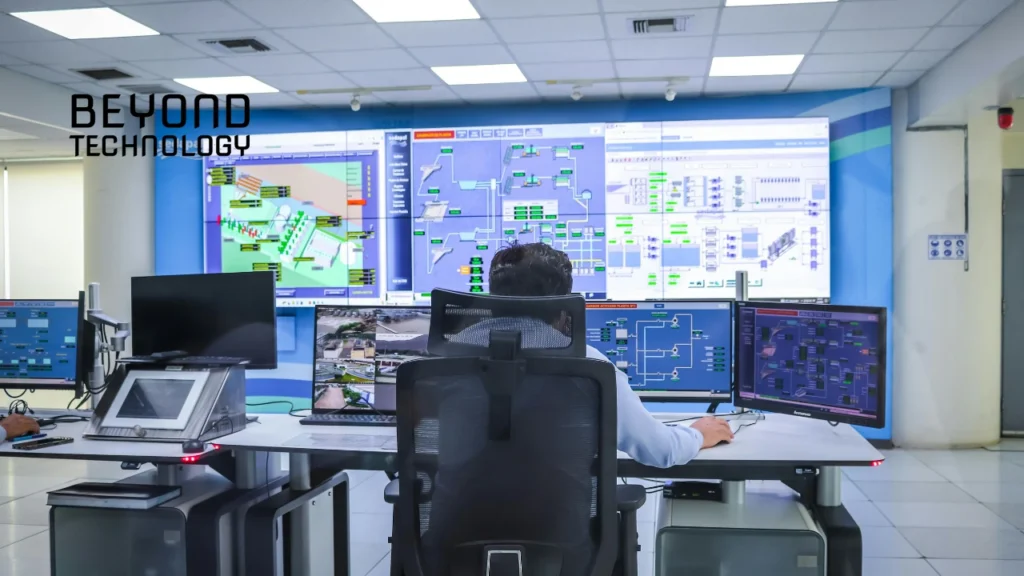
When chronic network instability signals a deeper operational risk
A corporate network that fails frequently is not simply an inconvenience for employees. It is a sign that the organization lacks the mechanisms needed to understand what is happening across its infrastructure in real time. Traditional networks, even when properly sized, operate as closed systems: administrators receive alerts after something has already failed, not before. Management is manual, troubleshooting depends on the judgment and availability of the technical team, and diagnosis is often based on assumptions rather than data.
This operating model produces what IT management commonly calls a firefighting culture. The technical team spends most of its time responding to incidents rather than strengthening the infrastructure. Operational load increases. Planning capacity shrinks. Meanwhile, the network continues generating friction that feels normal but carries a real cost: lost hours, interrupted processes, degraded user experiences, and, in regulated industries, compliance risks that are rarely tallied alongside technical incident reports.
Real-time telemetry and management systems with autonomous remediation change this logic entirely. Rather than waiting for a user to report a problem, the network continuously generates data about its own behavior: per-device latency, interference, channel saturation, anomalous traffic patterns. A system with predictive analytics capabilities can identify patterns that precede an outage and act before the failure ever reaches the user. The problem shifts from reactive to something managed before it has any impact.
The sector-specific cost of a network without visibility: healthcare, retail, and education don’t operate the same when connectivity fails
The cost of network instability is not the same across all environments. It depends directly on the processes the network supports and how critical those processes are to the organization.
In a healthcare setting, the network is the backbone of electronic health record systems, inter-unit communications, and connected monitoring devices. An interruption, even one lasting just a few minutes, can force clinical staff to work with incomplete information or fall back on manual procedures that introduce room for error. Beyond the immediate operational impact, a network infrastructure that cannot guarantee availability or proper traffic segmentation exposes the organization to patient data privacy risks governed in many jurisdictions by health information regulations and, from a cybersecurity standpoint, by frameworks such as GDPR and NIS2.
In retail, point-of-sale terminals, inventory management systems, and loyalty platforms operate in real time. An unstable network during a sales campaign does not only generate direct losses: it damages the customer experience, and if payment systems are affected, it can carry implications under the General Data Protection Regulation. In high-density device environments such as large stores or shopping centers, the network must manage hundreds of simultaneous connections with a level of reliability that reactive infrastructures can rarely sustain consistently.
In education, the digitalization of the classroom has made connectivity as essential as furniture. When the network goes down, learning stops. But the problem extends beyond the isolated disruption: an infrastructure with no visibility into connected devices makes it harder to control network access, segment traffic by user profile, and enforce the acceptable use policies that institutions are required to implement. The network stops being a support service and becomes a limiting factor for the educational model itself.
Proactive corporate network management: what sets a future-ready infrastructure apart
The difference between a network that generates chronic problems and one that operates reliably does not lie solely in the technology deployed. It lies in the management model. Organizations that have moved toward infrastructures with automation and operational intelligence share a defining characteristic: their IT teams work with data, not assumptions.
A network managed with continuous analytics tools makes it possible to identify which devices are consuming the most resources, which coverage areas are degrading, which users are experiencing the poorest connection quality, and why. This visibility does not only improve the day-to-day experience: it enables more precise investment decisions, supports budget justification with real data, and, in the context of compliance audits, demonstrates that the organization maintains effective control over its infrastructure.
Autonomous remediation, one of the defining capabilities of next-generation networks, goes a step further. When an anomaly is detected, the system can adjust configurations, reroute traffic, or isolate compromised devices without human intervention. For an IT team operating with limited resources, this represents a qualitative shift in how infrastructure is managed: less time fighting fires, more capacity for projects that deliver genuine value to the organization.
If the connectivity problems described in this article feel familiar, there is a good chance the current infrastructure is operating below its real potential, or has reached the limits of what it can deliver without structural evolution. At Beyond Technology, we work with mid-sized organizations in critical sectors to assess the current state of their network and map a path toward infrastructure that is more resilient, secure, and capable of supporting the processes that depend on it today. To understand where your organization stands, speak with one of our advisors.


