
 Global
 EU
EU USA
USA PA
PA PAK
PAK MEA
MEA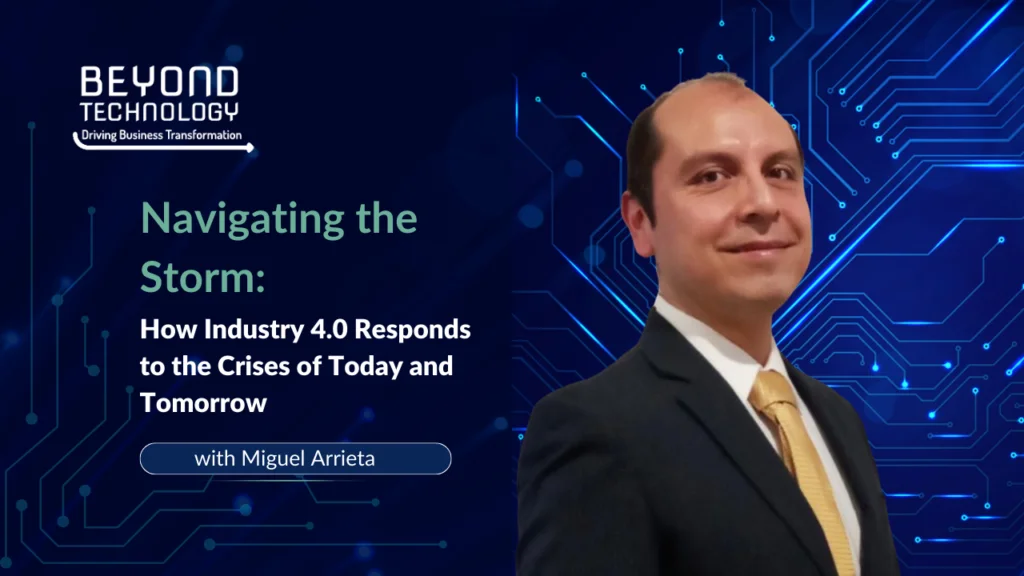
In the latest episode of Beyond Updates, the podcast exploring technological frontiers, we delve into an essential conversation with our distinguished guest, Miguel Arrieta. In this interview, we explore the keys to Industry 4.0 and its crucial role in addressing current and future crises.
Key Technologies of Industry 4.0:
Arrieta highlights two fundamental pillars of Industry 4.0 in crisis management. Firstly, he mentions advanced robotics, commonly associated with this industrial revolution. However, he emphasizes the importance of automation and information technology, highlighting their evolution into cyber-physical systems. During crises such as product shortages, these systems can adapt for mass production of critical products, as seen during the ventilator shortage amid the pandemic.
Another crucial tool is Big Data analysis, which not only enhances quality and productivity but can also foresee and prevent future crises by identifying patterns and making forecasts.
Success Stories in Implementing Industry 4.0 Strategies:
Miguel points out the most notable success case during the COVID-19 crisis: e-commerce giant Amazon. The combination of automation in its warehouses, autonomous delivery vehicles, and big data analysis through Amazon Forecast allowed it to anticipate consumer demands, even for new products with no history. This effective approach demonstrates Amazon’s understanding of business continuity.
Common Challenges in Adopting Industry 4.0 in Crisis Responses:
The integration of IT/OT networks is identified as a recurring challenge when transitioning from Industry 3.0 to 4.0. The convergence of these networks enables real-time data collection, but security is essential to prevent attacks. Overcoming this gap is crucial for productivity.
Emerging Trends to Handle Future Crises:
Two emerging trends were highlighted: data sharing between industries and Edge Artificial Intelligence (Edge AI). These trends, along with global harmonization and standard adoption, can improve effectiveness and efficiency in crisis management.
Cybersecurity and Data Protection:
Miguel concludes the interview by addressing cybersecurity and data protection in Industry 4.0. He recommends adhering to recognized frameworks and standards such as TISAX, NIST, or ISO 27001 to ensure a structured and comprehensive approach to supply chain security. Adopting a zero-trust security model and utilizing blockchain are also highlighted as essential measures to secure information integrity in an increasingly interconnected environment.
This fascinating interview highlights how Industry 4.0 not only drives operational efficiency but also plays a crucial role in crisis response, demonstrating that technology can be a powerful ally in challenging times.
Listen to the podcast here.


